An Escape Room First Date Isn't About Fun. It's About Evidence.
Millions of people pick escape rooms as first dates. The real reason isn't that they're fun. It's that 60 minutes locked in a room strips away everything fake.
A post went viral last week. Five thousand-plus likes, 432 retweets, over 150,000 impressions. The list included pottery, omakase, picnics, go-karts. And near the top: escape rooms.
The reason it resonated is buried in a parenthetical from the original post, translated from Indonesian: “not awkward but you still get to see their true personality.”
That’s the thing. Not “it’s fun.” Not “it’s different.” You get to see who they actually are.
That’s not a line about entertainment. That’s a line about evidence.
Everyone is talking about the fun
The conventional case for an escape room date is well-worn. Shared activity beats passive consumption: you’re doing something together instead of talking across a table. There’s a natural conversation scaffold: the puzzles. No awkward silences, no running out of topics. And there’s a story at the end, win or lose, that’s yours.
All of that is true. None of it is the real reason.
What nobody is saying
The escape room date works not because the experience is enjoyable, but because it’s one of the only social formats most people will ever encounter that’s designed to make social performance fail.
Think about what dinner is, structurally. You sit across from someone in a context built for talking. You have complete control over your words, your pacing, your narrative. You can be anyone you want to be for two hours: charming, emotionally available, completely composed. The restaurant is not testing you. It’s accommodating you.
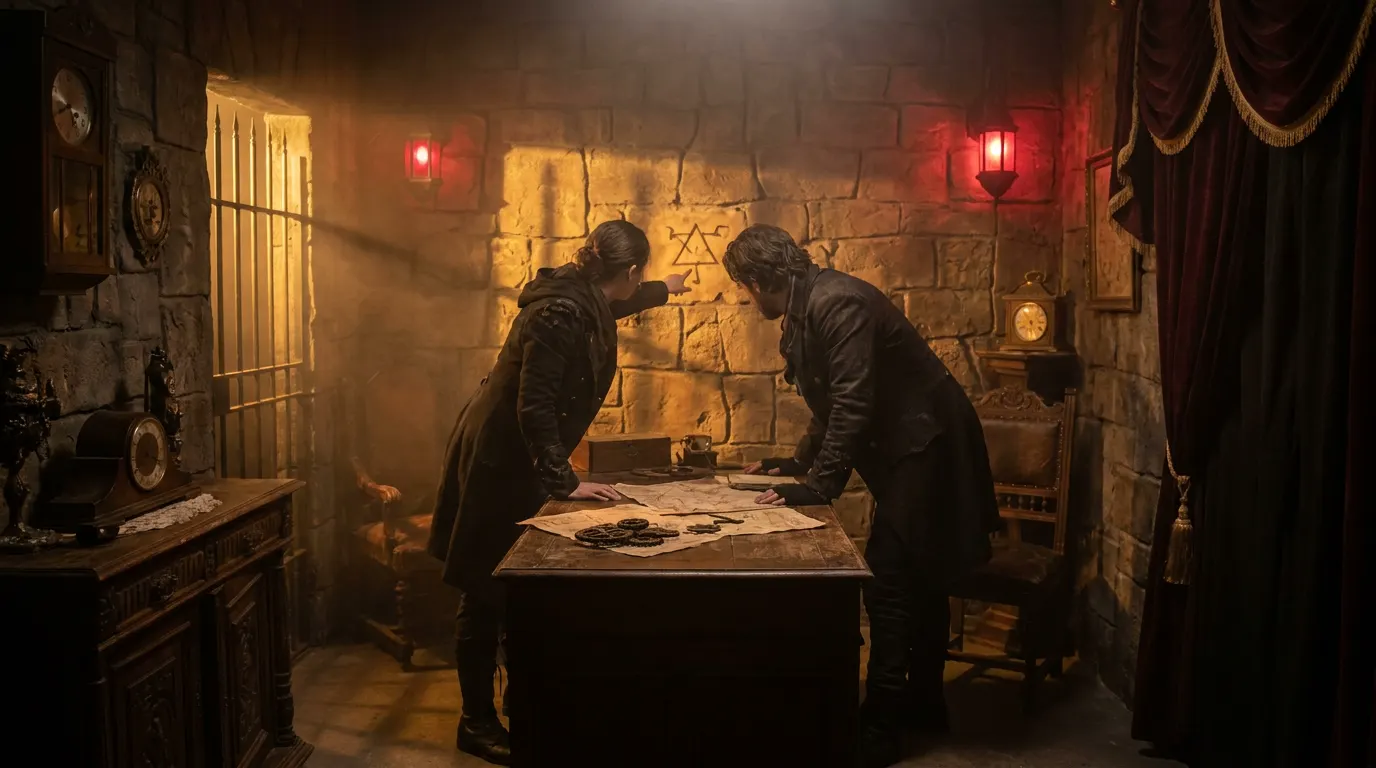
An escape room is the opposite. You’re locked in. The clock is running. The room gives you no credit for being charming. It gives you a problem.
What a room does, in sixty minutes, is strip away every layer of social performance and replace it with something you can’t rehearse: behavior under pressure.
And behavior under pressure is the only behavior that actually tells you anything.
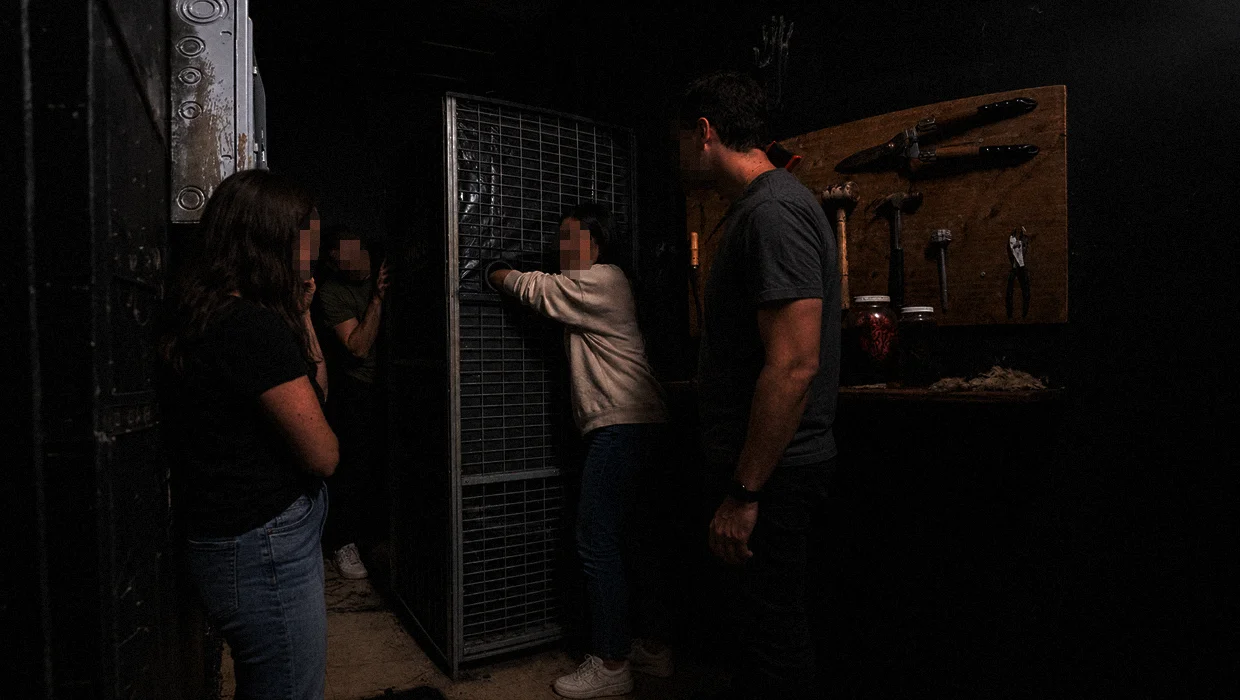
What the room is looking for
Watch anyone in an escape room for ten minutes and you’ll get a read that three hours over dinner can’t replicate.
Who takes charge when nobody’s been appointed leader? Some people grab a puzzle and start working. Some people wait to be told what to do. Some people immediately narrate the room back to the group in full, as if the debrief is the task. These aren’t performance choices; they’re reflexes.
Who communicates when they find a clue? The person who calls out “I found something” and holds it up for the group is wired differently than the person who solves it quietly and announces the answer. Both might be effective. But they’re different people. On a first date, you might not find that out for months.
Who manages frustration? Somewhere around minute 30, something won’t click. A lock won’t open. The logic of a puzzle won’t resolve. And whatever someone’s default response to low-grade frustration is, they’ll demonstrate it, live, in front of you. Patience. Irritability. Redirection. Shutdown. You’ll see it.
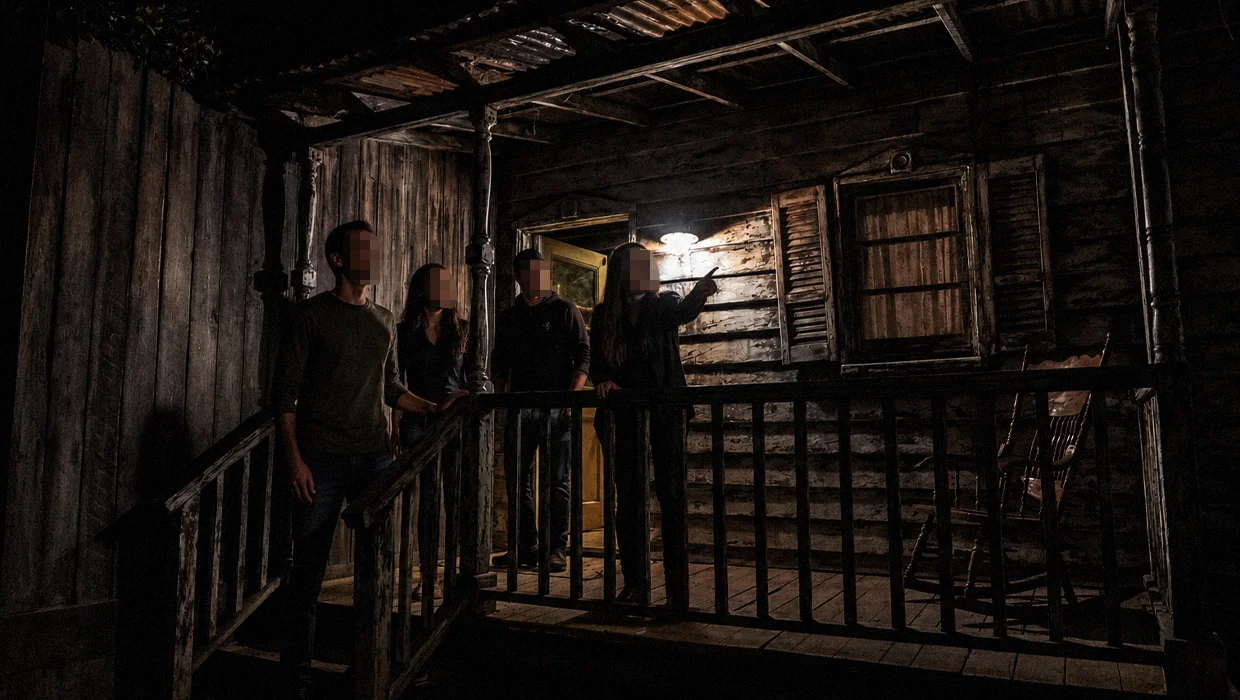
And here’s the part that the date-advice world hasn’t quite caught up to yet: horror rooms add a layer that regular puzzle rooms never touch.
Fear doesn’t negotiate with first impressions. It skips straight to the person underneath.
A horror escape room isn’t designed to be romantic, but physiologically it speeds the whole thing up. Adrenaline erodes the careful distance people maintain with strangers. People grab each other. People laugh at things that aren’t funny. People say what they actually think. The mask doesn’t fall; it just gets too inconvenient to keep wearing.
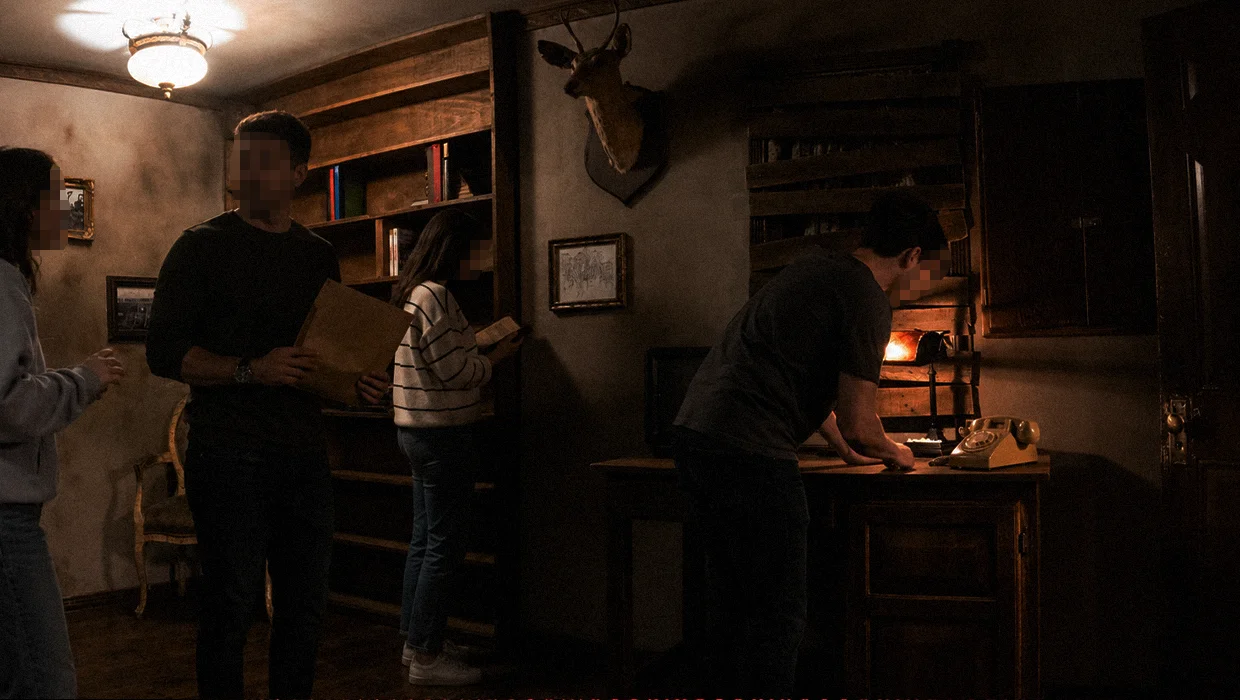
The structural advantage nobody acknowledges
Most first date advice focuses on chemistry. But chemistry is easy to fake, at least short-term. What’s hard to fake is collaboration.
An escape room is a collaboration test with a hard deadline, an external observer (the game master), and no exit until the clock hits zero. You can’t check your phone. You can’t change the subject. You can’t call it a night early without leaving the room together. The shared context is forced, and that produces information you wouldn’t get any other way.
The escape room date works across every demographic: teenagers, 20-somethings, long-married couples looking to reconnect. People who work well together in a room usually work well together outside one. People who don’t will show you why.
That’s not guaranteed chemistry. But it’s real information. And real information, early, is what the rest of dating is actually trying to produce.
If you want to know who someone is, stop asking them. Watch them try to solve something they’ve never seen before, with a stranger, against the clock.