The Backrooms Is Now a Movie. The Real Thing Has Been Here for Years.
A24's Backrooms film opened this week to strong reviews, and viewers keep calling it immersive. Here's what a real horror escape room gives you that the movie can't.
Kane Parsons was sixteen when he posted a found-footage YouTube video of a man wandering through an empty beige office corridor with no exit. Seventy-two million views later, A24 adapted it into a feature film. The movie opened this week to the kind of reviews most horror directors spend a career chasing. Critics describe it as immersive. Viewers are walking out of screenings saying it felt like an escape room.
That second group is who this is for.
What the Backrooms Gets Right
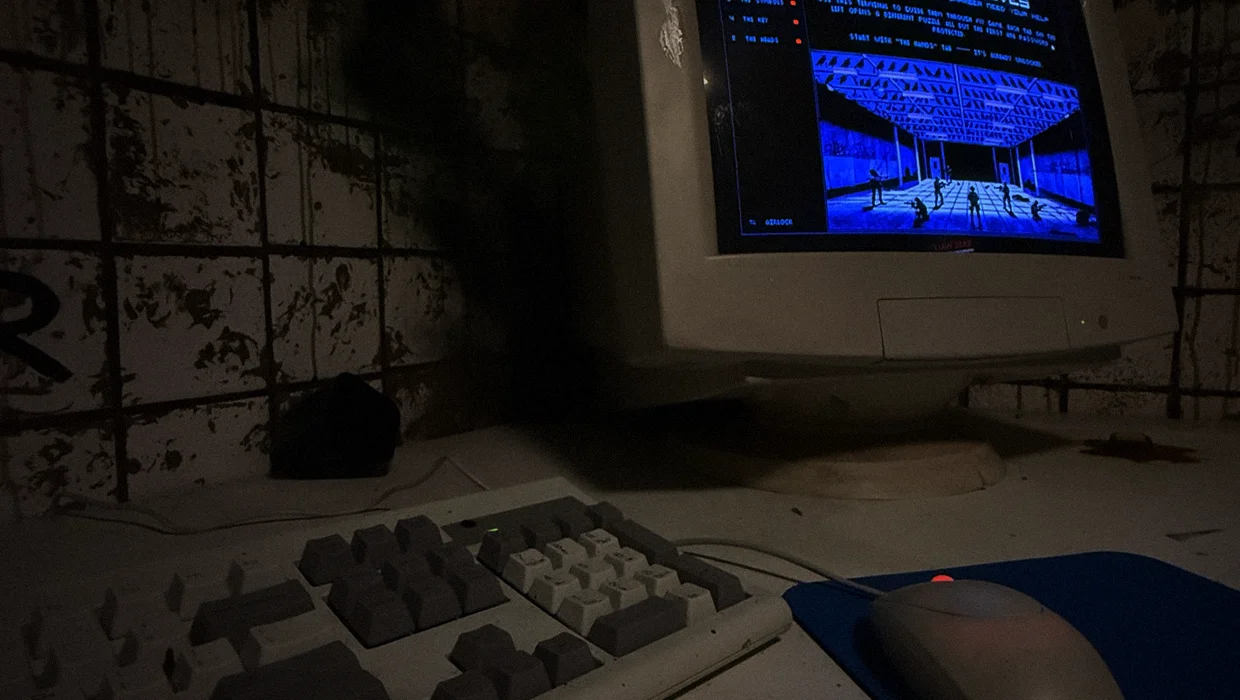
The premise strips down to almost nothing: a space that feels wrong, that you cannot leave, that offers no help and no landmarks. No monster to track. No characters to root for. Just the room and the fact that you should not be in it.
That is a different kind of horror than most films deliver. The dread lives in the situation itself. The environment is the threat. And audiences keep reaching for the escape room comparison because the feeling is close.
It is not coincidental. Escape rooms and the Backrooms are drawing from the same source: the specific wrongness of a designed space that has no normal exit.
What You Are Actually Doing With Your Hands
A film puts you in a seat. A horror escape room locks you in a room.
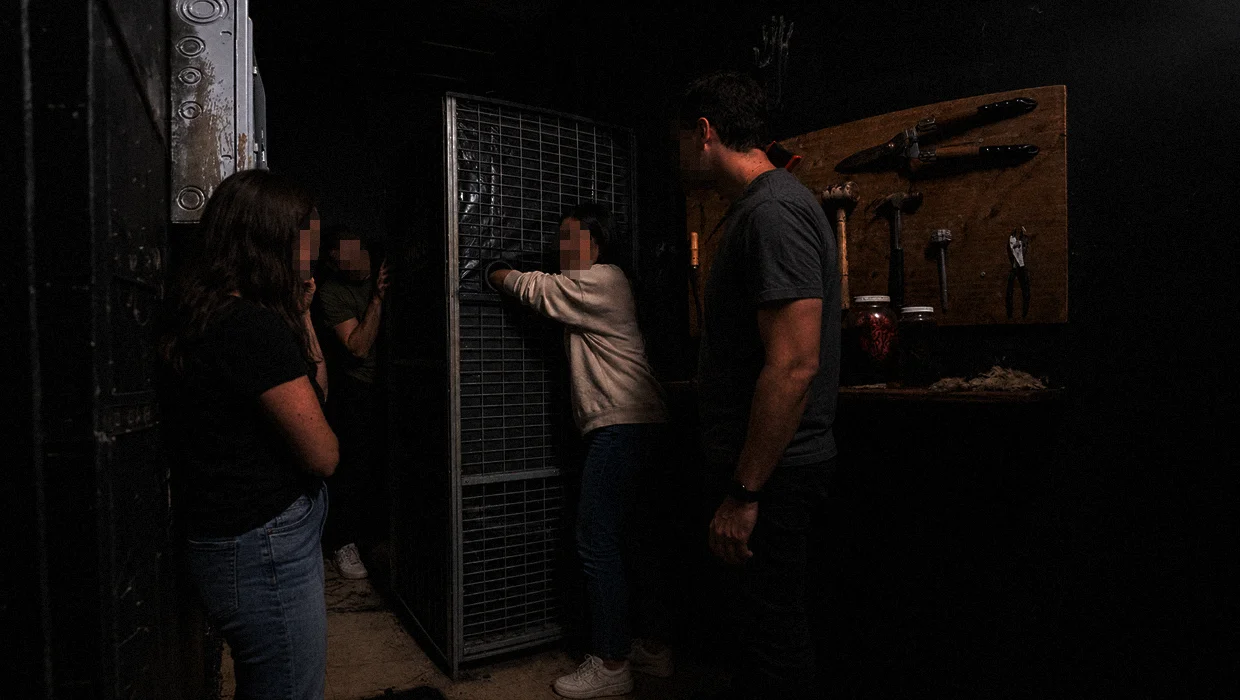
The clock runs. The environment closes in. When something happens, it happens to your group, not to a character you are watching. You are searching the space, turning objects over, working locks, reading what the room is telling you. The story moves because you make it move. If you freeze, nothing happens except the time disappears.
For certain kinds of people, that is not the scary part. That is the entire point.
What to Know Before You Book
A few things worth knowing before you go.
Every session at The Basement is private. Your group books the room; no strangers are added. Plan to be at the location for about 90 minutes total: check-in, briefing, 45 minutes inside the experience, wrap-up.
Age: The Basement recommends guests be 12 and up, given the horror themes, dark environments, and puzzle difficulty. This is a recommendation, not a hard rule. Parents decide. If you are accompanying someone younger, you buy a ticket and play alongside them.
On scare level: the honest answer is that it depends on what scares you. These rooms are not built around jump scares or haunted house startle tactics. The dread is atmospheric and story-driven, closer to the Backrooms’ wrongness-of-the-room approach than to a carnival fright maze. Nobody can fully calibrate your specific fear threshold in advance.
The Basement Experience
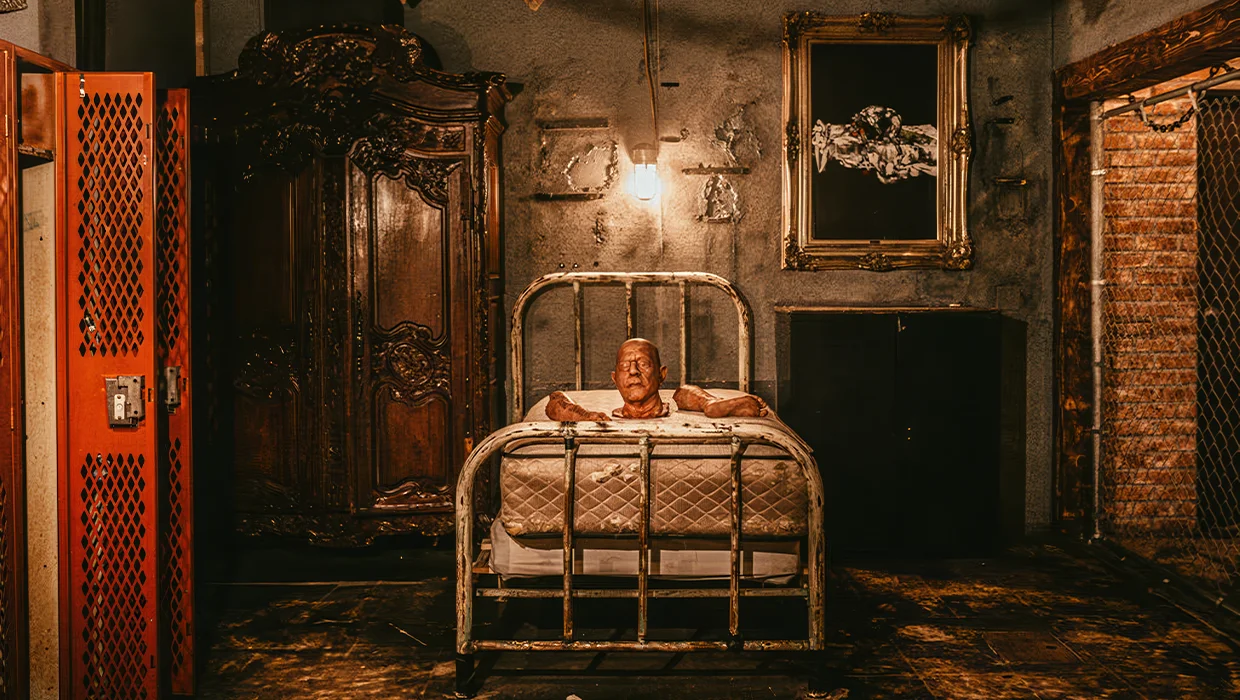
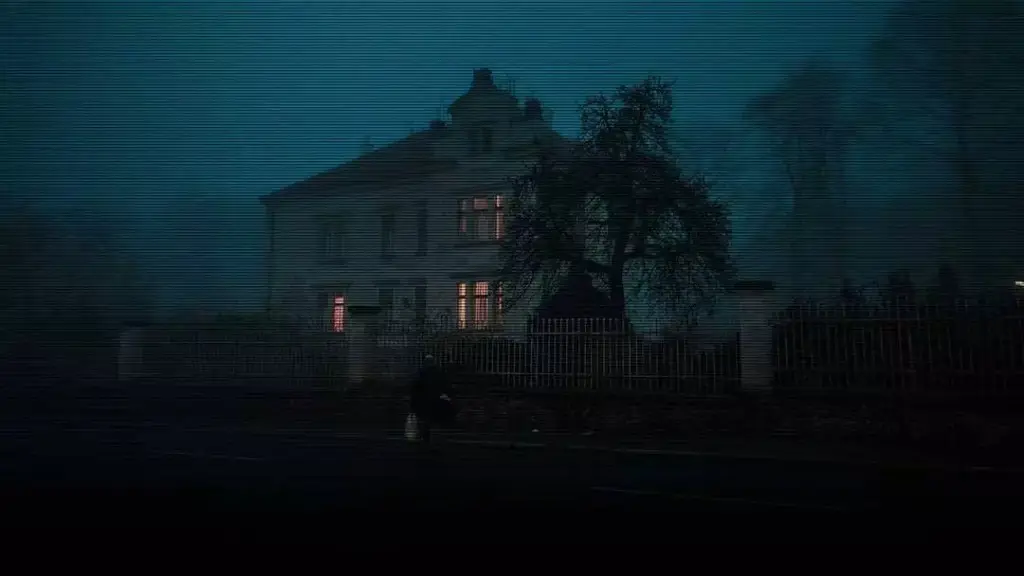
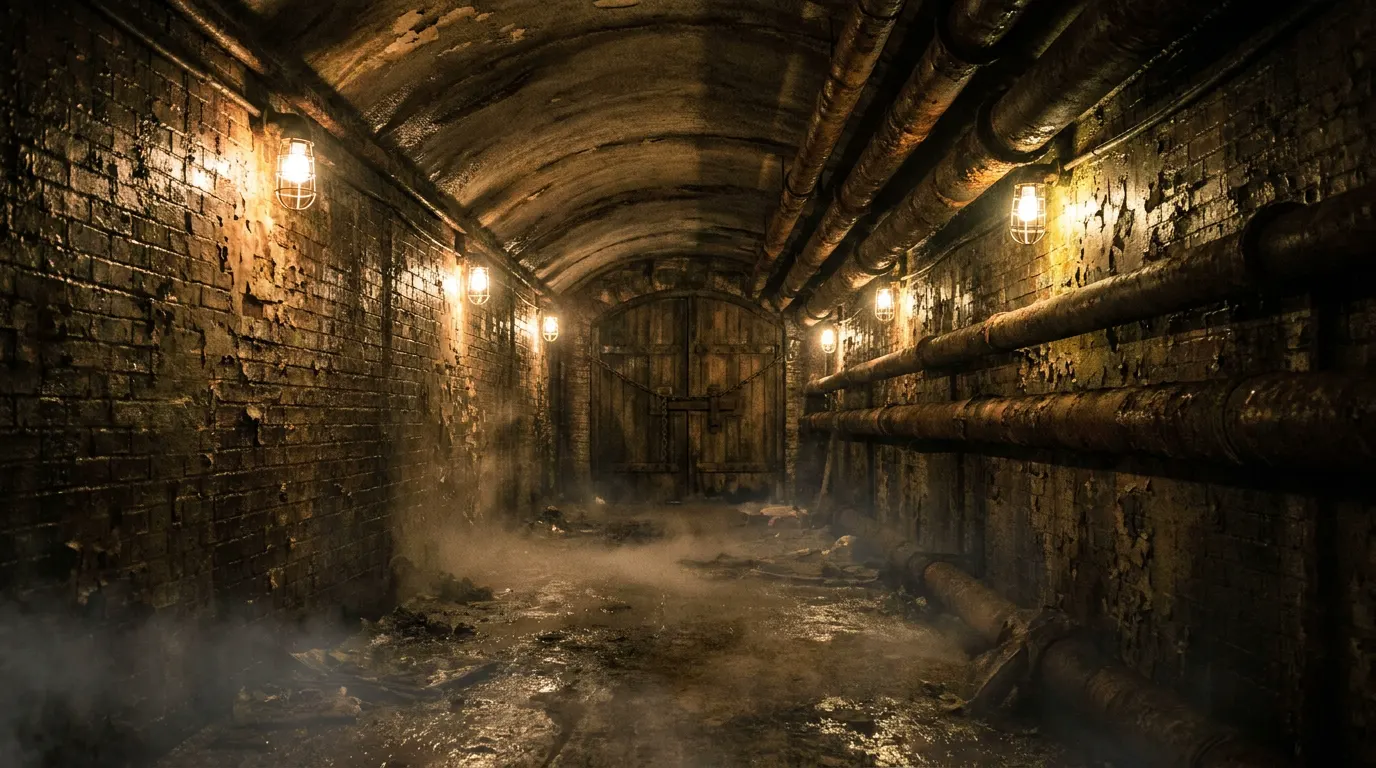
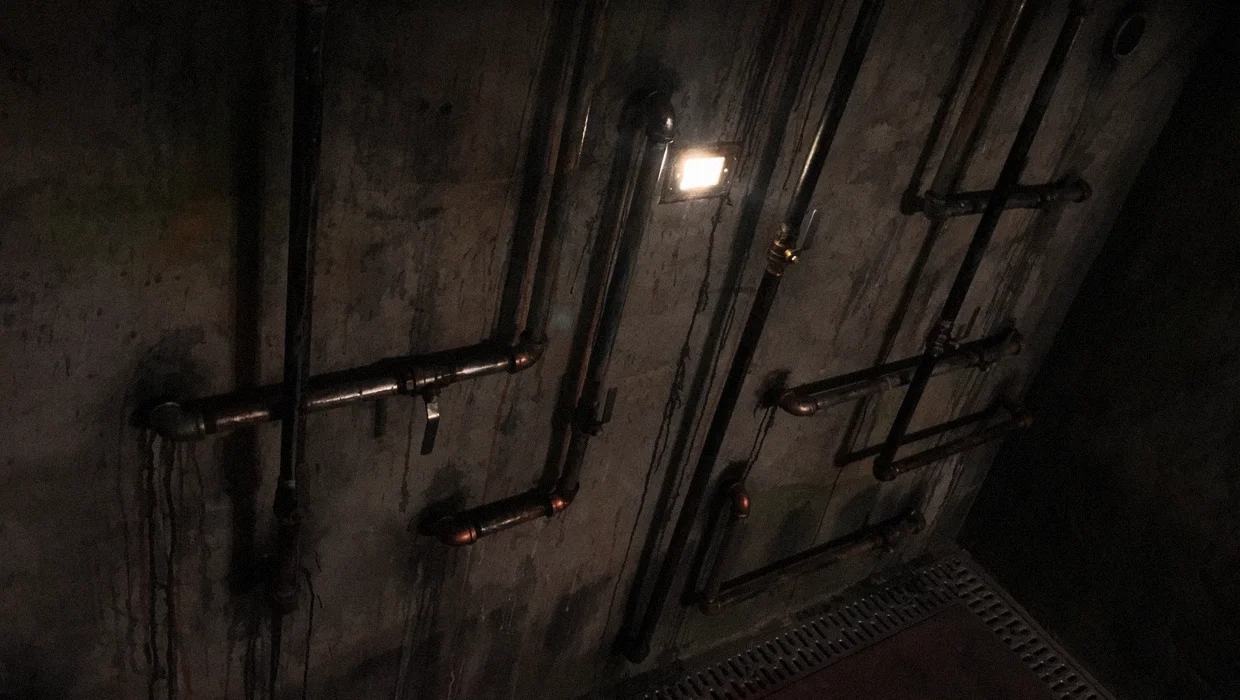
The Basement takes place in the lower level of Edward Tandy’s house. This is specific: not a generic horror dungeon, but a particular filthy basement built by one person, used for particular purposes that become clearer as you search. The production design leans toward real rather than theatrical. The space is deliberately unpleasant in ways that serve the story.
The room is non-linear. Multiple people can search different areas at the same time, which is why groups of four or more tend to move most efficiently through it. You will find objects, codes, and fragments of information that need to be connected. Some of what you find is unpleasant by design.
There is a live performer inside the room. Not playing Tandy. Playing another captive, someone else also trapped in the house. That relationship is part of the game.
The Other LA Rooms
Los Angeles has additional experiences depending on what your group wants.
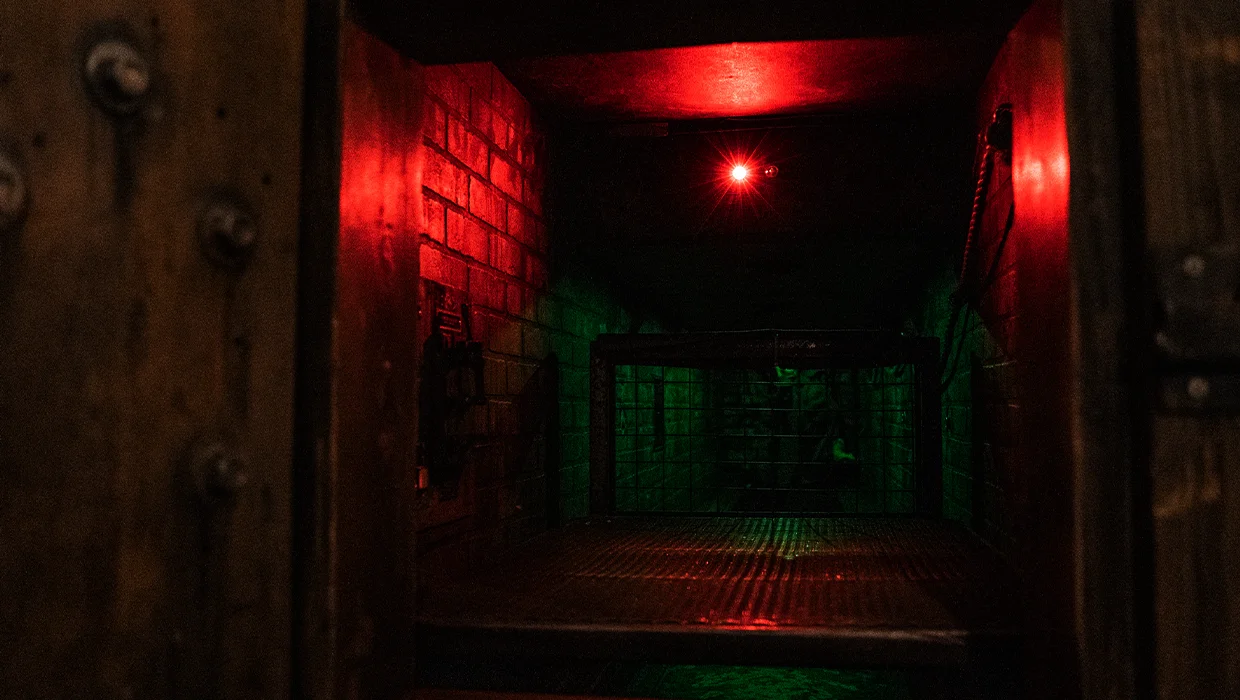
The Elevator Shaft puts you at the bottom of an eight-by-eight-foot mechanical shaft with the elevator descending from above. No live actor. The room physically changes as the clock runs. The threat is the environment. It is one of the most mechanically complex escape rooms built in the country, and it is designed for small groups that want an intense, close-quarters experience without a performer in the room.
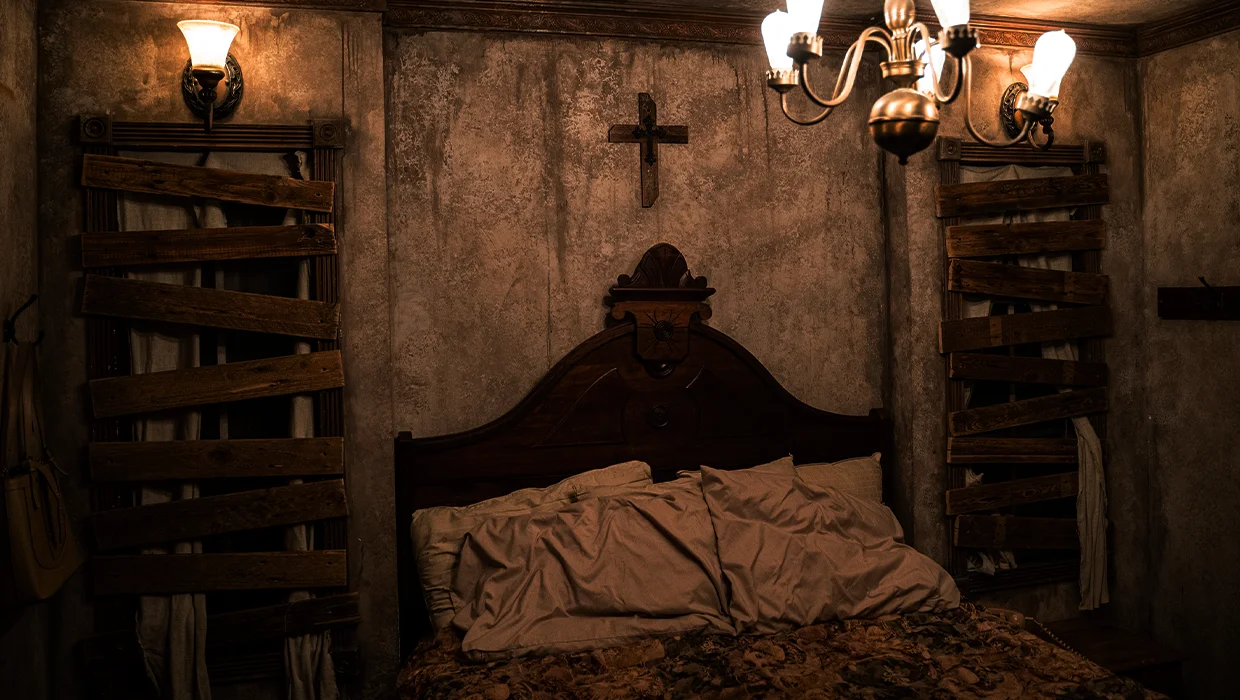
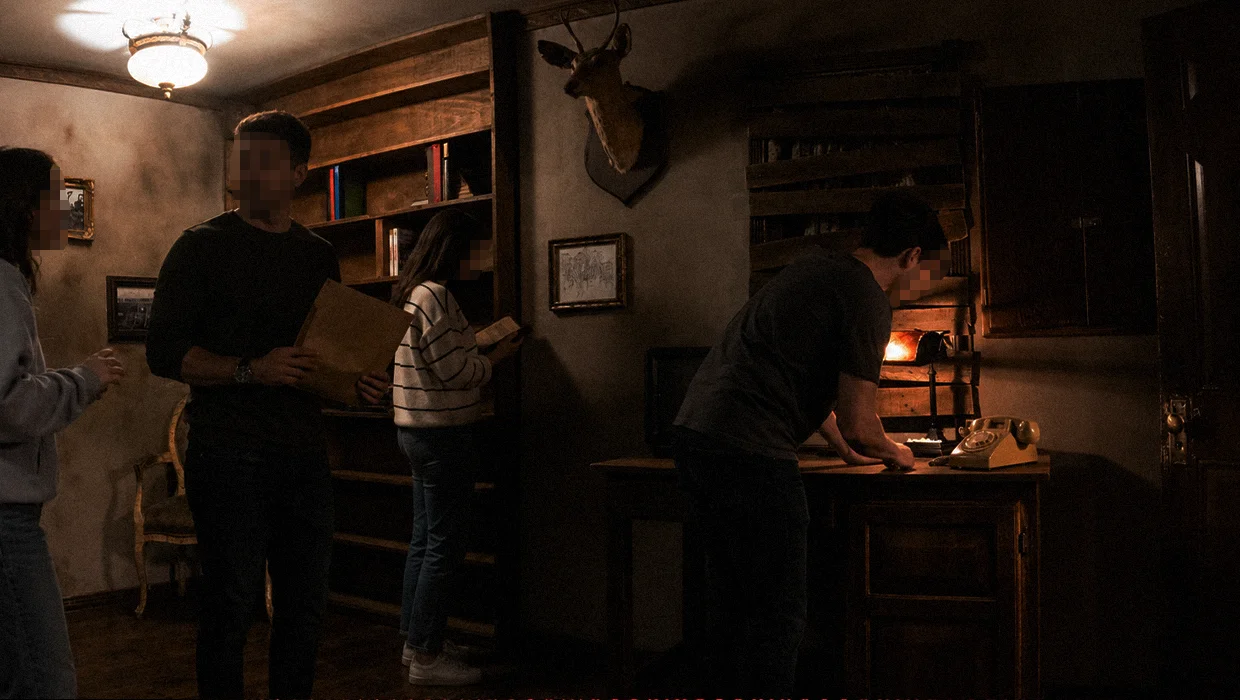
The Study moves upstairs into a more cerebral part of the Tandy house: linear, logic-based, elegantly built. Different dread from the basement, same world.
The Window Is Short
The Backrooms will be part of the cultural conversation for two or three more weeks. Then it recedes, the way films do. Horror escape rooms will still be here. But the natural entry point this particular moment provides will not be.
If someone in your group has been waiting for a reason to try this, that reason exists right now. The Basement has locations in Los Angeles, Las Vegas, and Kansas City. Walk-ins depend on what is already scheduled that day; reservations are the reliable choice.
Parsons’ film gives you ninety minutes of watching someone trapped. The Basement gives you ninety minutes in the building where it actually happens.